The Pilots He Left Behind
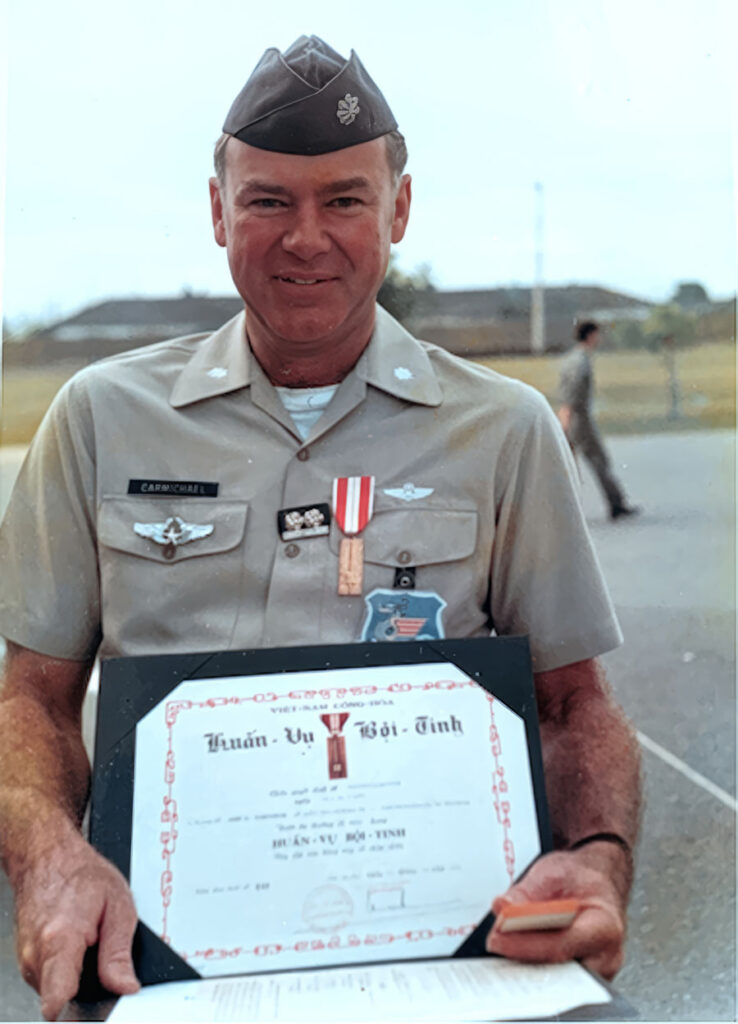
Lt. Col. John Carmichael came home from Vietnam just before Christmas 1971. His family had waited a year for that moment. But part of him remained with the pilots he had left behind.
A few days before Christmas 1971, Lt. Col. John C. Carmichael finally came home.
His wife, Sara, had her husband back, his sons had their father, and Christmas was only days away. After a year apart, there was every reason for the Carmichael family to celebrate.
His son Chris remembers something else about that Christmas. His father had returned from Vietnam with a mixture of emotions his young son couldn’t begin to understand. There was happiness and relief at being home with the family he loved, but there was also a sadness, perhaps even a yearning, for the men he had left behind.
They were pilots in the South Vietnamese Air Force, men Carmichael had spent months teaching, flying beside and coming to know. While he was home preparing to celebrate Christmas with his family, they were still half a world away in a country at war.
It would take Chris years to fully understand how much his father cared about them, and why leaving them behind had been so difficult.
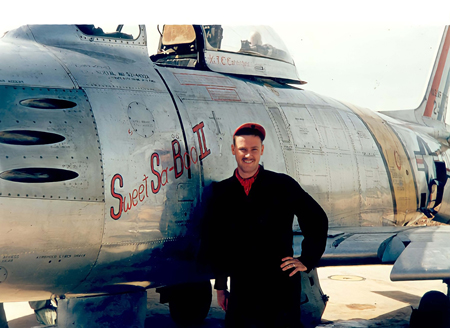
Nearly two decades earlier, John Carmichael had gone to war for the first time as a 24-year-old Air Force lieutenant. In Korea, he flew F-51 Mustangs and later F-86 Sabres, completing 60 combat missions.
One loss from that war stayed with him.
Lt. Marion Smotherman was one of Carmichael’s closest friends, a fellow member of Cadet Class 52-C. During a bombing mission, Smotherman became disoriented in bad weather. His F-86 struck a mountain, killing him.
Carmichael came home from Korea knowing how quickly a pilot could be lost when weather obscured the horizon and the human senses could no longer be trusted.
In the years that followed, he became an expert in the very skills that might have saved his friend’s life. As an instructor pilot and flight examiner, Carmichael helped develop and standardize instrument flying procedures, teaching pilots to rely on their aircraft’s instruments when clouds, darkness or weather made visual flight impossible.
For Carmichael, instrument flying was more than a technical discipline. He understood what could happen when a pilot didn’t have those skills.
Eventually, that knowledge would take him back to war.
From a Family Dinner Table to Vietnam
By the time Carmichael volunteered for service in Vietnam in 1971, he was 43 years old. He was no longer the young lieutenant who had gone to Korea eager to fly combat missions. He was an experienced lieutenant colonel and instructor, as well as a husband and father whose life extended far beyond the cockpit.
Vietnamese pilots, however, were already familiar faces to the Carmichael family.
During the 1960s, John had trained South Vietnamese Air Force pilots at Randolph Air Force Base in Texas, and sometimes he invited his students home for dinner.
Chris remembers those evenings as a child might. The visitors were interesting men from a faraway country, and they usually brought him a gift. That alone made the arrival of Dad’s Vietnamese students something to look forward to.
Only later would Chris understand what those evenings revealed about his father. John Carmichael didn’t simply teach pilots. He came to care deeply about the men he taught.
When Carmichael arrived in Vietnam, his assignment eventually brought together much of what he had spent his career learning. He helped establish an Instrument Pilot Instructor School for the South Vietnamese Air Force, teaching some of their best pilots to become instrument instructors themselves. Those men could then return to their squadrons and pass that knowledge to other pilots.
The need was urgent. Many South Vietnamese pilots avoided clouds whenever possible, but combat didn’t always allow them to choose the weather. A pilot who suddenly found himself surrounded by clouds without adequate instrument training could become disoriented, lose control of his aircraft or fly unknowingly into terrain.
Carmichael had already lost a friend that way.
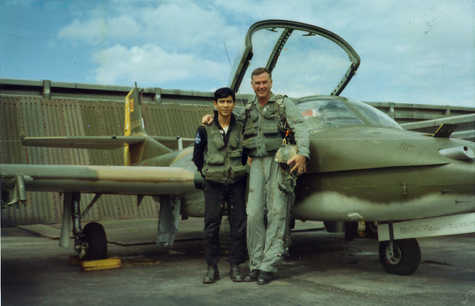
In a letter to his uncle in Albany, New York, he described what he hoped his work in Vietnam might accomplish. Someday, he wrote, one of those pilots might find himself trapped in weather and forced to depend upon what he had been taught.
Then he explained what success would mean to him:
“If I can teach even one of them the knowledge he needs to avoid that situation, then my year over here has all been worthwhile.”
Nearly 20 years after losing his friend in the mountains of Korea, Carmichael was trying to make sure another pilot, in another war, had the knowledge to find his way home.
From One Home to Another
The hospitality the Carmichael family had once shown Vietnamese pilots in America was returned in Vietnam. His students invited him into their homes, and John wrote to Sara about those visits. Their homes were modest, he told her, and they reminded him of the years when he and Sara were first married and beginning their own life together.
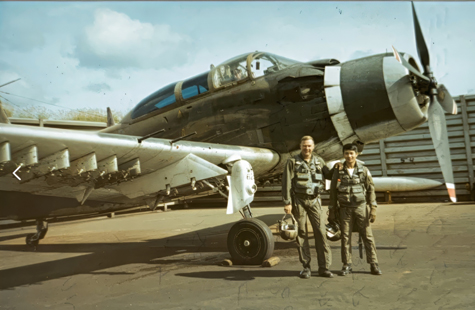
It was an ordinary observation in a letter sent home from a war, but a revealing one. Carmichael could sit in the home of one of his Vietnamese students, look at the family around him and recognize something of his own life.
These were husbands, sons, friends and fathers. Their families waited for them, just as Sara and the boys waited for John.
Carmichael and his team completed their training mission in 16 weeks, rather than the 26 originally expected. He received the Bronze Star and other American and Vietnamese honors for his service.
Yet when his father spoke of Vietnam in the years that followed, Chris remembers that it was the people who remained with him. John wondered about the pilots he had trained and what had become of them. He never forgot their determination or their courage.
The Faces in the Photographs
John Carmichael died in 2002, but the photographs from Vietnam remained.
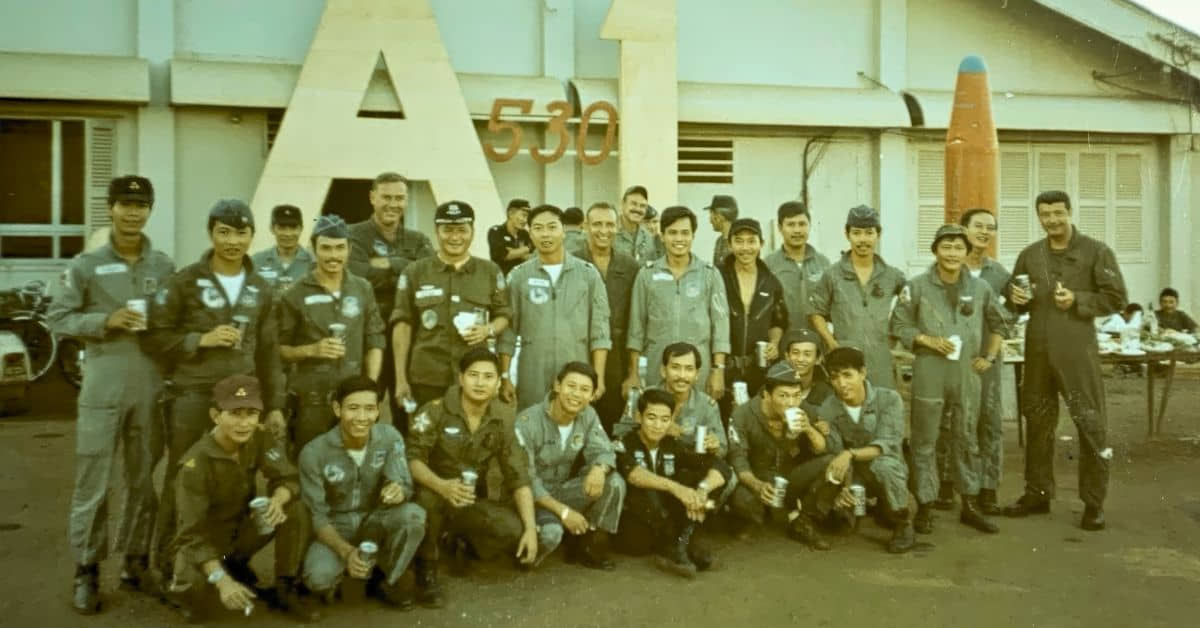
Chris remembered watching them fill the pages of family albums after his father came home. There were aircraft and air bases, groups of young Vietnamese pilots and the unmistakably tall figure of John Carmichael standing among them.
As a boy, Chris had looked at those photographs without fully knowing the stories behind the faces. As a grown man, he began to wonder who they were and what had happened to them.
Eventually, his search led him to Xuan Pham, a former South Vietnamese Air Force pilot with the 530th “Jupiter” Squadron at Pleiku, one of the units Carmichael had helped train.
Pham began helping Chris identify the men in the old photographs. Faces that had remained unnamed for more than half a century became people again, with names and histories of their own.
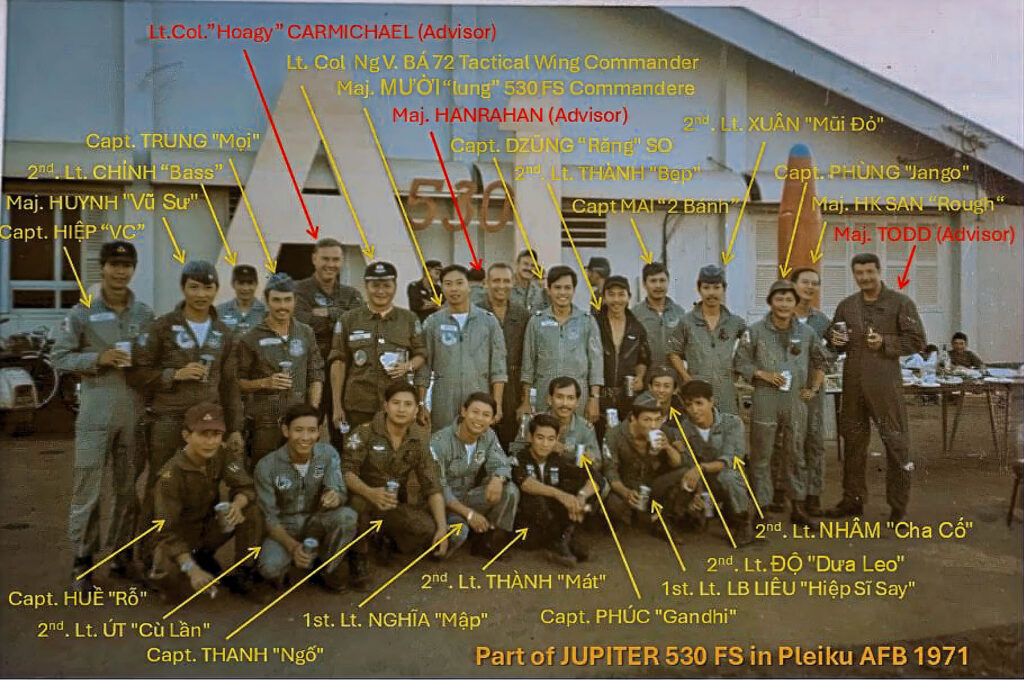
And Xuan Pham remembered John Carmichael.
“Your Dad is a gentleman I never forget,” he told Chris.
Pham remembered him as serious, and he also remembered something that made Chris smile. John Carmichael was a big man, and Pham had always wondered how someone so tall could possibly fit inside the small cockpits of the aircraft he flew.
Then Pham offered Chris something far more meaningful. Looking back across the decades at the American instructor he had known during the war, he wrote:
“I am sure that he lived the life that he intended.”
For a son searching through old photographs and trying to better understand the father who stood in them, it was an extraordinary thing to hear.
More than half a century after John Carmichael left Vietnam, one of the men from that distant part of his life still remembered him.
Christmas, 1971
John Carmichael understood that his work in Vietnam was part of a much larger and increasingly uncertain story. The United States was beginning to reduce its direct involvement in the war, and the South Vietnamese military was being trained to assume greater responsibility for defending its country.
But wars described in terms of policy and strategy can look very different from a family’s dinner table.
Carmichael had flown with these men, taught them and been welcomed into their homes. He knew how hard they were trying, and he understood what they would face as American involvement diminished.
There was little he could do about the course of the war. What he could do was teach, giving a pilot knowledge he had not possessed before and hoping that, someday, in bad weather or darkness, it might be enough to bring him safely back to the people waiting for him.
Then, a few days before Christmas, John Carmichael returned home, to the people waiting for him.
Chris remembers the lights on the tree and the family’s efforts to make that Christmas as merry as possible. They were grateful to be together again, and there was joy in having their father home.
But there was something different about him.
As a boy, Chris couldn’t fully understand it. In the years that followed, as his father’s photographs filled albums and his stories became part of the family’s history, he began to understand what John had carried home from Vietnam.
He had left people behind.
They were the pilots who had once sat at the Carmichael family’s dinner table in America, the men who later welcomed him into their own homes, and the aviators he had taught to trust their instruments when their eyes could no longer tell them where they were.
John Carmichael was home for Christmas. They were still at war.
Perhaps that is why Chris remembers the lights on the Christmas tree as somehow lacking the sparkle they once had. His father was exactly where he wanted to be, surrounded by the family he loved, but some part of him was still half a world away with the pilots he could no longer protect.
All he could do was hope that when the clouds closed around one of them, the lessons would come back.
Trust the instruments. Remember your training.
And come home.
Author’s Note: The Legacy of John Carmichael’s Vietnam Mission
Lt. Col. John C. Carmichael’s work in Vietnam came at a critical point in the war. As the United States reduced its direct involvement, the Republic of Vietnam Air Force was being rapidly expanded and prepared to assume greater responsibility for defending South Vietnam. By 1971, the VNAF was flying approximately 63 percent of the combat air sorties within South Vietnam, creating an urgent need for well-trained pilots, instructors and aircrews.
Drawing on years of experience in instrument flying and pilot instruction, Carmichael helped establish an Instrument Pilot Instructor School under combat conditions. By training Vietnamese pilots to become instructors themselves, the program allowed those skills to spread from pilot to pilot and squadron to squadron. A project expected to take 26 weeks was completed by Carmichael and his team in just 16.
During his Vietnam service, Carmichael flew multiple types of aircraft and completed 106 combat missions. He received the Bronze Star as well as honors from the Republic of Vietnam.
The full reach of his work is impossible to measure. But Carmichael had established his own measure of success in a letter home: if what he taught helped even one pilot survive, his year in Vietnam had been worthwhile.
Sources & Further Reading
- Lt Col John C. Carmichael Biography
Aviation Heritage Park & Museum
https://www.aviationheritagepark.com/news/veterans/lt-col-john-c-carmichael/ - VNAF 528th Fighter Squadron
The 528th Fighter Squadron was part of the 41st Tactical Wing within the 1st Air Division.
The squadron was stationed at Da Nang Air Base in South Vietnam.
The unit flew the jet-powered A-37B Dragonfly (often called the “Super Tweet”) for close air support and counterinsurgency missions.
The 528th Fighter Squadron’s emblem and patch featured the insignia “Thien Loi” (God of Thunder / Thunder God). - Historical photography courtesy Christopher Carmichael, used with permission.
Continue Exploring
- The Sound of Help Coming – The Story of Col Ray Nutter
- My Enemy My Friend – The Story of Brig Gen Dan Cherry
- Fourteen Hours to Tripoli – The Story of Col Arnie Franklin
- Fifty Meters– The Story of Gen Joseph Ralston