Fifty Meters
March 11, 1970
Somewhere over Laos
Part One: The Emergency
“They need you to drop 50 meters closer.”
 There are moments in combat when every decision matters.
A few seconds too late. A few feet too far. A slight hesitation.
Lives hang in the balance.
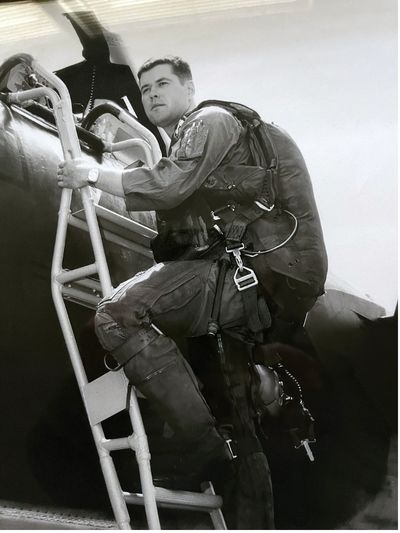
On March 11, 1970, Captain Joseph W. Ralston found himself facing one of those moments high above the mountains of Laos. Somewhere below, an American Special Forces unit was surrounded. North Vietnamese soldiers were closing in. The men on the ground had exhausted nearly every option.
Now they were calling for air support.
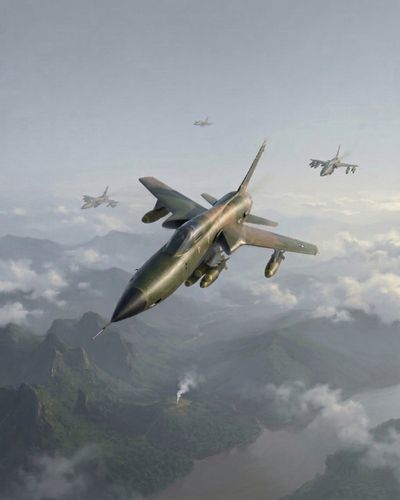
Within minutes, four F-105 Thunderchiefs roared toward the battle.
Captain Joe Ralston was leading them.
More than half a century later, after becoming a four-star general, Vice Chairman of the Joint Chiefs of Staff, and NATO’s Supreme Allied Commander Europe, Ralston still considered that day the most meaningful mission of his remarkable military career.
Not because of the enemy he fought.
Because of the Americans he helped save.
A Young Captain Flying One of the Air Force’s Toughest Missions
When visitors meet General Joseph Ralston today, they see a distinguished military leader whose career reached the highest levels of the United States Air Force and NATO.
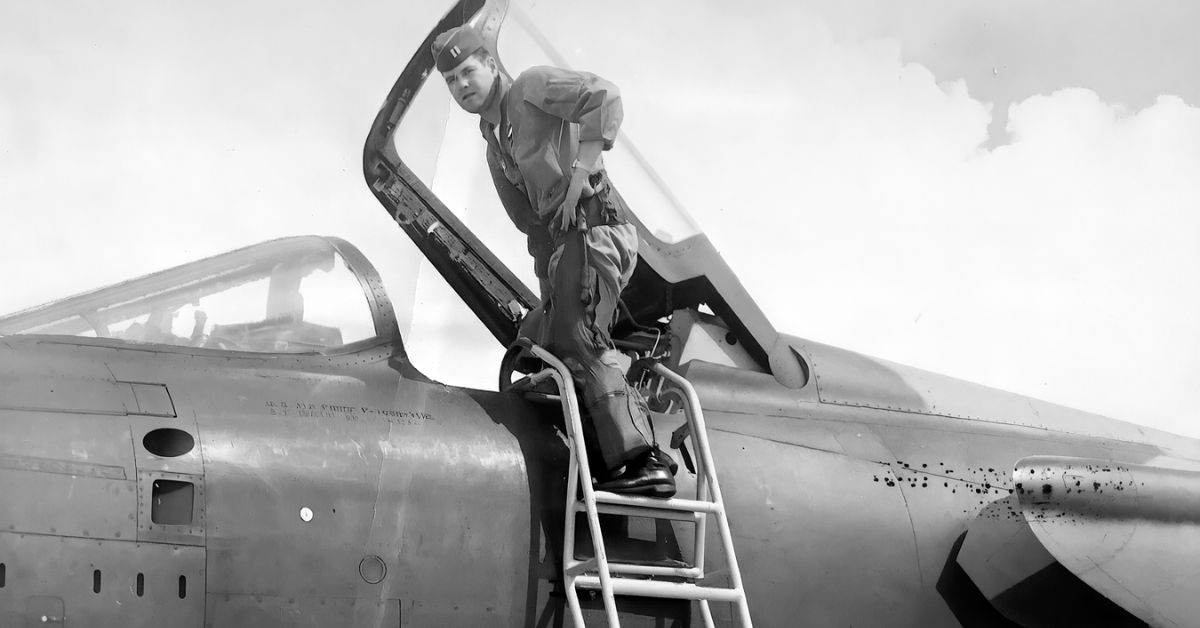
In 1970, however, he was Captain Joe Ralston, a combat pilot assigned to the 355th Tactical Fighter Wing at Takhli Royal Thai Air Force Base in Thailand. His aircraft was the Republic F-105 Thunderchief, known affectionately by its pilots as the “Thud.”
By 1970, the Thunderchief had earned a reputation as one of the toughest combat aircraft of the Vietnam War. Originally designed to deliver nuclear weapons at supersonic speed, the massive single-engine fighter found a different purpose over Southeast Asia. It became the Air Force’s principal strike aircraft during the Vietnam War, carrying heavy bomb loads through some of the most dangerous airspace in the world.
But Joe Ralston wasn’t flying an ordinary strike mission.
He was part of one of the Air Force’s most dangerous specialties.
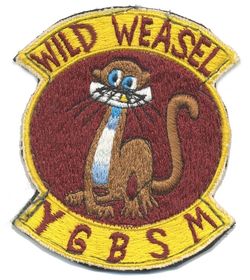
He flew Wild Weasels.
First In. Last Out.
The Wild Weasel mission was unlike anything aviation had seen before.
 North Vietnam’s Soviet-built SA-2 surface-to-air missile system had become a deadly threat to American aircraft. Hidden radar sites could track fighters from miles away before launching missiles capable of destroying them high above the battlefield.
Someone had to find those missile sites.
Someone had to make them reveal themselves.
That job belonged to the Wild Weasels.
Their mission was as dangerous as it sounds. Flying ahead of strike packages, Wild Weasel crews intentionally tempted enemy radar operators to switch on their guidance systems. Once the radar came alive, the crews located it and attacked before missiles could destroy the aircraft following behind them.
The unofficial Wild Weasel motto became one of the most respected in military aviation:
“First In. Last Out.”
It was more than a slogan.
It was a promise.
These crews willingly became the first targets so hundreds of other American airmen would have a better chance of returning home.
The work demanded extraordinary courage, disciplined flying, and calm judgment under relentless pressure. Those qualities would soon be tested in a very different kind of mission.
The Secret War
The events of March 11 did not unfold over Vietnam.
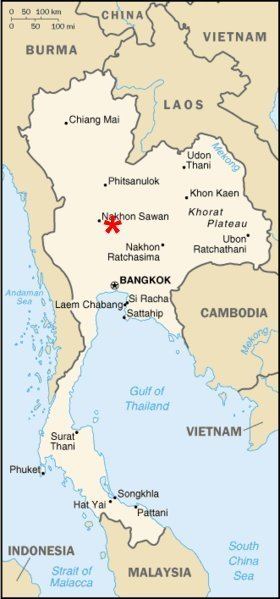 They happened in neighboring Laos.
For decades, much of what occurred there remained hidden from public view.
Although Laos was officially neutral during the Vietnam War, it became the setting for one of the conflict’s least understood campaigns. North Vietnamese forces moved men and supplies through the Ho Chi Minh Trail that crossed eastern Laos, while American airmen, intelligence officers, and Special Forces personnel worked quietly to disrupt those operations.
Many missions were classified.
Some remain only partially documented today.
General Ralston later explained that the Forward Air Controller was probably a Raven, one of a small group of Air Force pilots who volunteered for one of the war’s most unusual assignments. Flying light observation aircraft in civilian clothes, they worked alongside General Vang Pao and Royal Lao forces during the Secret War. Their job was to locate friendly troops, mark enemy positions with smoke rockets, and guide strike aircraft onto targets with extraordinary precision.
On that March morning, none of that mattered to the men trapped below.
They simply needed help.
Fast.
“There Was an American Special Forces Unit…”
Years later, General Ralston wrote about the mission in his family memoir, A Collection of Life Stories.
His description is simple.
Matter-of-fact.
Perhaps because some memories never require embellishment.
“There was an American Special Forces unit that was trapped on a hilltop in Laos with a large formation of North Vietnamese soldiers about to surround them.”
His flight of four F-105 Thunderchiefs happened to be in the area.
Each aircraft carried six 500-pound bombs.
The call came.
Ralston immediately turned his formation toward the embattled Americans.
Visibility was poor.
The mountains and jungle below were shrouded in haze, with less than two miles of visibility. Somewhere beneath the clouds, the Forward Air Controller searched desperately for a way to guide the fighters onto the correct target without endangering the soldiers they had come to rescue.
Then he saw the smoke.
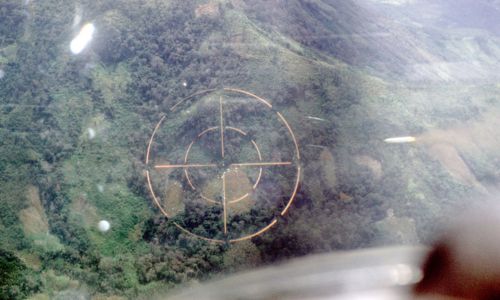 The Forward Air Controller fired a white phosphorus smoke rocket to mark the target.
Ralston rolled his Thunderchief into the attack.
His first bomb landed directly on the smoke.
It was exactly where the FAC had marked the target.
Then the radio crackled.
“That was good… and 100 meters from the friendlies. But they need you to drop 50 meters closer.”
Fifty Meters
To most people, fifty meters doesn’t sound particularly close.
To a combat pilot delivering 500-pound bombs, it is almost unimaginably close.
One hundred sixty-four feet.
Barely half the length of a football field.
Close enough that every pilot understood what was at stake.
One mistake.
One bomb released a fraction of a second early or late.
One slight deviation caused by weather, terrain, or enemy fire.
The men they had come to save could become casualties themselves.
Ralston also knew something else.
Air Force rules did not allow bombs to be dropped that close to friendly troops unless the ground commander declared an emergency.
So he answered the FAC.
“OK, but they need to declare an emergency in order for me and my flight to drop that close to the friendlies.”
The reply came immediately.
“They have declared an emergency.”
 There was nothing more to discuss.
Captain Joe Ralston acknowledged the call.
Then he led four Thunderchiefs into one of the most demanding bombing missions of the Vietnam War.
Twenty-Four Passes
The first attack ended.
Then came another.
Then another.
And another.
Captain Ralston’s flight made twenty-four attack passes, placing bomb after bomb so close to the American position that every run demanded extraordinary precision and complete trust between the pilots overhead and the unseen controller on the radio below.
The Distinguished Flying Cross awarded to Captain Ralston later described the challenge in understated military language:
“Due to the proximity of the opposing forces, precise ordnance delivery was mandatory, where even a small deviation could be catastrophic.”
Those words scarcely convey what was happening in the cockpit.
Each dive required discipline.
Each release demanded confidence.
Each pullout left little time to prepare for the next attack.
The four Thunderchiefs were doing exactly what they had been trained to do, but this time their objective was not a bridge, a supply depot, or a missile site.
It was a handful of Americans fighting for their lives on a remote hilltop in Laos.
And every pass gave them another chance to survive.
To Be Continued…
Coming Next Week
Captain Ralston’s four Thunderchiefs returned to Thailand with no way of knowing whether their extraordinary precision had saved American lives… or caused tragedy.
Two days later, the answer finally arrived.
Previously in Fifty Meters…
Captain Joe Ralston and his flight of four F-105 Thunderchiefs completed twenty-four danger-close attack passes over a trapped Special Forces team in Laos. Then they returned to Thailand with no idea whether they had saved American lives… or caused tragedy.
Fifty Meters
Part Two: The Mission General Joe Ralston Never Forgot
The Long Flight Home
Eventually, the bombs were gone.
The smoke began to clear.
Captain Joe Ralston gathered his flight and turned the four Thunderchiefs back toward Takhli Royal Thai Air Force Base in Thailand.
The mission was over.
Or so it seemed.
Back at Takhli, there was still an important question to answer.
During the debriefing, intelligence officers and senior commanders wanted to know why Ralston’s flight had dropped bombs so close to friendly forces. Such decisions were never taken lightly. Had American troops been injured, every detail of the mission would have been examined.
Ralston explained exactly what had happened.
The emergency had been declared.
The Forward Air Controller had directed the attacks.
His flight had delivered every bomb exactly where it was needed.
Then they waited.
There were no satellite images. 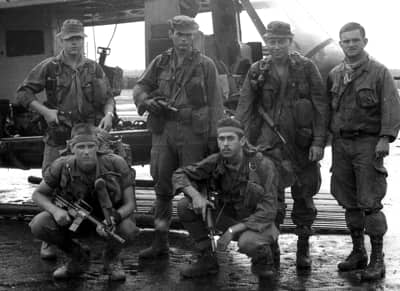
No instant communications.
No text messages from the battlefield.
The men who had flown the mission had no way of knowing whether their extraordinary precision had saved lives or caused tragedy.
Two days later, the answer arrived through intelligence channels.
The Special Forces team had survived.
The North Vietnamese attack had been broken.
There were no friendly casualties.
For Captain Joe Ralston, that report made every risk worthwhile.
Years later, when reflecting on his military career, he wrote:
“That mission was the most satisfying of the 147 combat missions I flew.”
The Distinguished Flying Cross
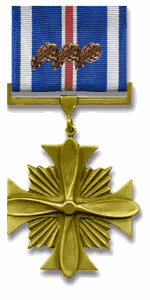 Captain Ralston received the Distinguished Flying Cross for his actions that day, his third award of the decoration.
Like many military citations, the language is concise, but every sentence carries weight.
It reads in part:
“Captain Joseph W. Ralston distinguished himself by extraordinary achievement while participating in aerial flight… Captain Ralston led a four-ship flight tasked with providing close air support for a friendly position under attack by opposing forces. Due to the proximity of the opposing forces, precise ordnance delivery was mandatory, where even a small deviation could be catastrophic… He skillfully led his flight in an extremely successful attack, inflicting heavy casualties upon the hostile forces, thus relieving the besieged position.”
Military citations rarely tell the whole story.
They don’t describe the tension in a pilot’s voice.
They don’t describe the trust between the Forward Air Controller circling low over the battlefield and the fighter pilots diving through the clouds.
They don’t describe the Americans on the hilltop listening for the sound of jet engines that meant help had finally arrived.
But behind those carefully chosen words lies one remarkable fact.
Every American on that hilltop lived.
A Career That Reached the Highest Levels
March 11, 1970, was only one day in Joe Ralston’s career.
There would be many more.
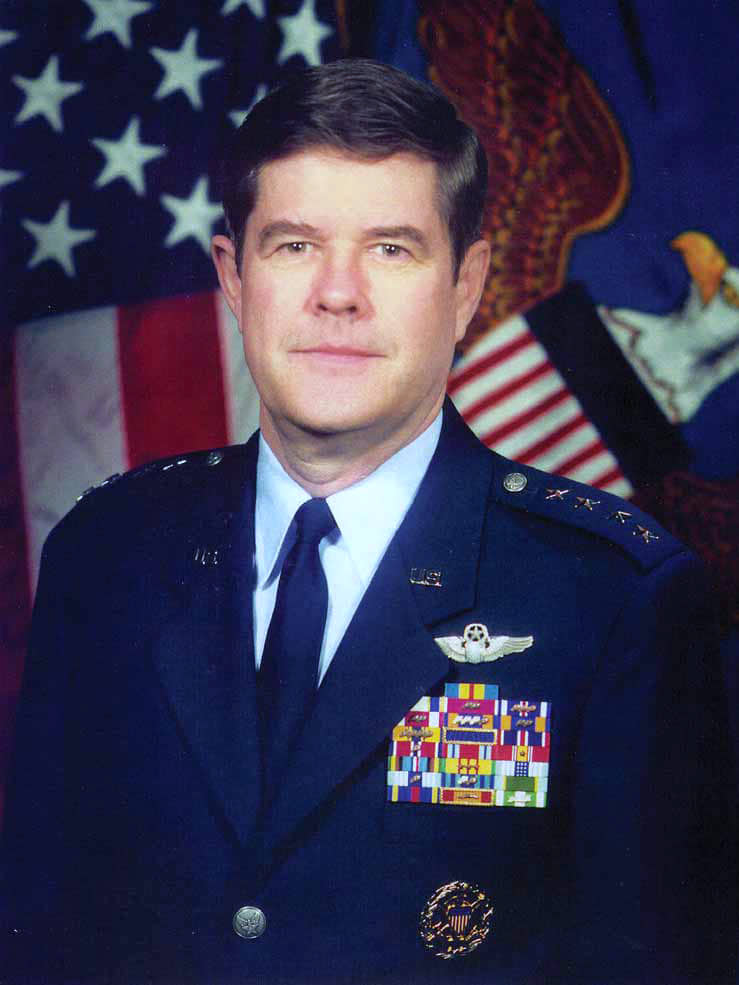 Following Vietnam, his leadership abilities carried him steadily upward through the ranks of the United States Air Force. He commanded fighter squadrons, wings, numbered air forces, and major commands. Eventually he became Vice Chairman of the Joint Chiefs of Staff, the nation’s second-highest military officer, before assuming one of the most prestigious positions in the world as NATO’s Supreme Allied Commander Europe.
Few military careers have reached greater heights.
His decorations include the Defense Distinguished Service Medal, Army Distinguished Medal, Navy Distinguished Service Medal, Air Force Distinguished Service Medal, Legion of Merit, Distinguished Flying Cross, Meritorious Service Medal, Air Medal, and many others earned over decades of service.
Yet when General Ralston reflected on all those honors, he did not point first to the medals awarded as a four-star general.
He pointed back to a remote hilltop in Laos.
To a frightened Special Forces team he never met.
To a voice on the radio asking him to move fifty meters closer.
That tells us something important about the man.
Leadership isn’t measured only by rank.
Sometimes it is measured by the decisions made long before promotions and titles ever arrive.
Why This Aircraft Matters
The F-105 Thunderchief being restored for Aviation Heritage Park’s Circle of Honor is much more than an impressive fighter aircraft.
It represents a generation of aviators asked to perform extraordinary missions under extraordinary circumstances.
 The Thunderchief became one of the hardest-worked aircraft of the Vietnam War. It carried heavier bomb loads than many World War II bombers while flying at nearly the speed of sound. It endured intense anti-aircraft fire, surface-to-air missiles, and enemy fighters. Hundreds were lost in combat.
For Wild Weasel crews, the danger was even greater.
Their mission required them to fly toward threats that every instinct told them to avoid.
General Ralston’s F-105 reminds us that courage often has little to do with fearlessness.
It has everything to do with accepting responsibility.
On March 11, 1970, that responsibility included the lives of Americans he could not see.
He trusted the Forward Air Controller.
His wingmen trusted him.
The soldiers on the hilltop trusted all of them.
Together, they accomplished what seemed nearly impossible.
Standing Beside History
Someday, visitors to Aviation Heritage Park will stand beside General Joe Ralston’s restored F-105 Thunderchief.
Children will marvel at its size.
Veterans will recognize its unmistakable lines.
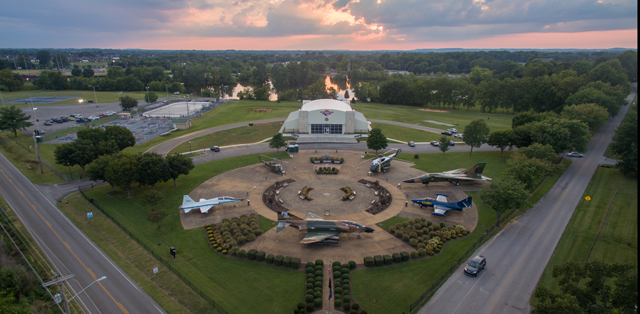 Many visitors will admire it simply because it is a beautiful airplane.
But those who know its story will see something else.
They will imagine four Thunderchiefs streaking across the mountains of Laos.
They will picture a lone Forward Air Controller circling beneath them, searching for a break in the clouds.
They will hear the calm voice over the radio.
“That was good… but they need you to drop 50 meters closer.”
They will understand why a young captain asked for an emergency declaration before risking everything.
They will picture twenty-four attack passes over a desperate battlefield.
And they will appreciate the relief felt two days later when word finally reached Takhli that every American had survived.
General Joe Ralston spent a lifetime leading airmen, commanding great organizations, and shaping military history.
Yet the medal he treasured most was earned as a young captain who simply answered a call for help.
Perhaps that is why this story deserves to be remembered.
The restored F-105 at Aviation Heritage Park is not merely a tribute to an accomplished military leader.
It is a reminder that, on one March morning in 1970, four Thunderchiefs arrived over a remote hilltop in Laos just when they were needed most.
One pilot accepted the responsibility for leading them.
And because he did, a group of American soldiers came home.
Author’s Note
Much of the fighting that occurred in Laos during the Vietnam War remained classified for many years, and some operational records are still unavailable. This story is based on General Joseph Ralston’s personal recollections, his Distinguished Flying Cross citation, and historical research into the F-105 Thunderchief, Wild Weasel operations, and air support missions conducted during the Secret War in Laos. Where official records remain unavailable, historical context has been included without extending beyond the available evidence.
Sources & Further Reading
- General Joseph Ralston Biography
Aviation Heritage Park & Museum
https://www.aviationheritagepark.com/aviators/col-arnold-franklin-el-dorado-canyon/ - The Secret War in Laos
https://retrospectjournal.com/2026/02/08/a-short-history-of-the-u-s-s-secret-war-in-laos/ - The Thud Wild Weasels
https://www.nationalmuseum.af.mil/Visit/Museum-Exhibits/Fact-Sheets/Display/Article/197447/f-105f-thud-wild-weasels-and-rolling-thunder/
Featured artwork by aviation artist Piotr Forkasiewicz, used with permission.
Continue Exploring
- The Sound of Help Coming – The Story of Col Ray Nutter
- My Enemy My Friend – The Story of Brig Gen Dan Cherry
- Fourteen Hours to Tripoli – The Story of Col Arnie Franklin