
Lt. Col. Roy D. Simmons | WWII Photo Reconnaissance Pilot
Roy D. Simmons was born in September 1922 in Bowling Green, Kentucky, and attended Richardsville High School in Warren County. His early life was marked by adversity following the death of his mother when he was ten years old. Raised primarily by his grandmother, Simmons 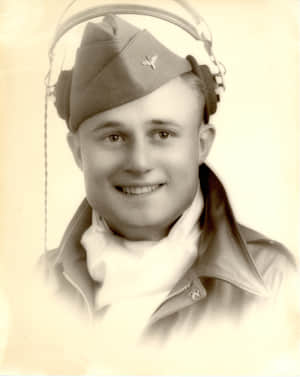 developed the independence and discipline that would later define his military career.
On September 7, 1943, while serving in the military, he married his sweetheart, Glendel Whalin—known to all as “Jennie.” Throughout his wartime service, Simmons named each of his aircraft Flying Jennie in her honor, carrying that personal connection with him on missions across multiple theaters of combat.
At the time of the Attack on Pearl Harbor, Simmons was employed at a warehouse in Louisville, Kentucky. Motivated by the nation’s entry into World War II, he entered the Aviation Cadet Program at Bowman Field and was sworn into active duty in November 1942.
Following primary, basic, and advanced flight training typical of Army Air Forces pilot pipelines of the era, Simmons transitioned into fighter aircraft, initially flying the Curtiss P-40 Warhawk. The P-40, while already being eclipsed by newer designs in the European Theater, remained a rugged and dependable aircraft used extensively for ground attack and tactical support missions. His demonstrated skill as a pilot led to selection for tactical reconnaissance duty—one of the most demanding and hazardous roles in the Army Air Forces.
Simmons was assigned to the 111th Tactical Reconnaissance Squadron, part of the Twelfth Air Force in the Mediterranean Theater of Operations. Tactical reconnaissance units operated at low to medium altitudes, often alone and without escort, conducting visual and photographic reconnaissance of enemy troop movements, supply lines, and battle damage assessment. These missions required not only precision flying, but also the ability to operate deep in hostile territory under constant threat from anti-aircraft fire and enemy fighters.
Upon transition into reconnaissance operations, Simmons was given a choice between two advanced aircraft platforms: the Lockheed P-38 Lightning and the reconnaissance-configured North American P-51 Mustang (commonly designated as F-6 variants). The F-6 Mustang was equipped with high-resolution K-series aerial cameras mounted in the fuselage, replacing some armament in certain configurations. However, many pilots—including Simmons—favored retaining forward-firing .50-caliber machine guns for survivability during low-level missions. His now well-known response—“Which one has guns?”—reflects both the realities of tactical reconnaissance and his personal approach to risk.
Flying the F-6 Mustang, Simmons conducted missions across North Africa, Sicily, Italy, and later into France and Germany following Allied advances. These aircraft combined long range, high speed, and excellent low-altitude handling—ideal characteristics for reconnaissance pilots who needed to evade interception while capturing critical intelligence. The Merlin-powered P-51 also allowed rapid ingress and egress over contested territory, increasing mission survivability compared to earlier platforms.
One of Simmons’ most significant combat actions occurred on August 22, 1944, near the village of La Pezade in southern France during the Allied push following Operation Dragoon. While flying an armed reconnaissance mission—aboard his aircraft Flying Jennie—Simmons and his wingman, Lt. Richard Hoy, encountered a German motorized column advancing toward the town. The two pilots initiated repeated strafing attacks, employing .50-caliber machine gun fire to disrupt and destroy vehicles and equipment.
 During one such pass, Lt. Hoy descended to extremely low altitude as his target detonated beneath him, resulting in a fatal crash. Concurrently, elements of the French Resistance—the Maquis—engaged the same German forces. In the ensuing battle, 23 resistance fighters were killed, but their combined efforts, alongside the aerial attack, successfully halted the German advance.
In recognition of this shared sacrifice, the town of La Pezade erected a memorial consisting of 24 crosses—23 bearing French flags and one bearing the American flag in honor of Lt. Hoy. The memorial stands as a rare and poignant symbol of cooperation between Allied air power and local resistance forces.
Following World War II, Simmons continued his service in the United States Air Force, which became an independent branch in 1947. Over the course of a 25-year career, he transitioned into the jet age, flying aircraft such as the Northrop F-89 Scorpion—an early all-weather interceptor designed for air defense during the early Cold War—and the Convair F-102 Delta Dagger, a supersonic interceptor integral to continental air defense under NORAD.
His assignments included service at the Pentagon as well as postings in Alaska and Spain, reflecting the global scope of early Cold War operations. Alongside his operational duties, Simmons pursued higher education, ultimately earning a Doctor of Education degree. He concluded his Air Force career as a Lieutenant Colonel and as Department Head and Professor of Aerospace Studies at the University of Massachusetts, where he helped train future Air Force officers through the ROTC program. He retired from active duty in 1967 at the age of 44.
In civilian life, Simmons continued his commitment to education as Dean of Students at Massasoit Community College, where he served for 13 years and played a key role in expanding both enrollment and academic offerings.
Decades after the war, the events at La Pezade resurfaced when an American researcher discovered the memorial and traced its connection to Simmons. In August 2010, Simmons and members of his family were invited by the French government to attend the annual remembrance ceremony. There, he was formally recognized for his role in the 1944 action and awarded the Chevalier of the French Legion of Honor—France’s highest national order of merit.
Simmons’ has a long list of awards and medals including the Distinguished Flying Cross with 1 Oak Leaf Cluster, the Air Medal with 4 Oak Leaf Clusters, a Distinguished Unit Citation, the Air Campaign Medal, the World War II Victory Medal, the National Defense Service Medal, the Combat Readiness Medal, the Air Force Longevity Service Award w Silver Oak Leaf Cluster, the Air Force Commendation Medal with 1 Oak Leaf Cluster and the French Croix De Guerre.
Lt. Col. Roy D. Simmons’ career reflects the evolution of American air power from propeller-driven fighters of World War II to supersonic interceptors of the Cold War. His service as a reconnaissance pilot placed him at the forefront of Allied battlefield intelligence operations, where individual skill and courage directly influenced the success of ground campaigns. His legacy endures not only in military history, but in the lasting bond between an American airman and a small French town he helped defend.