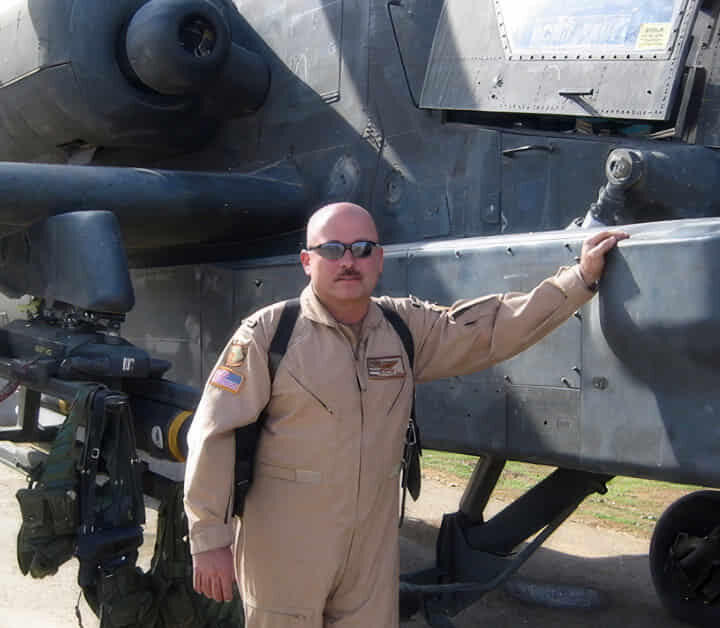
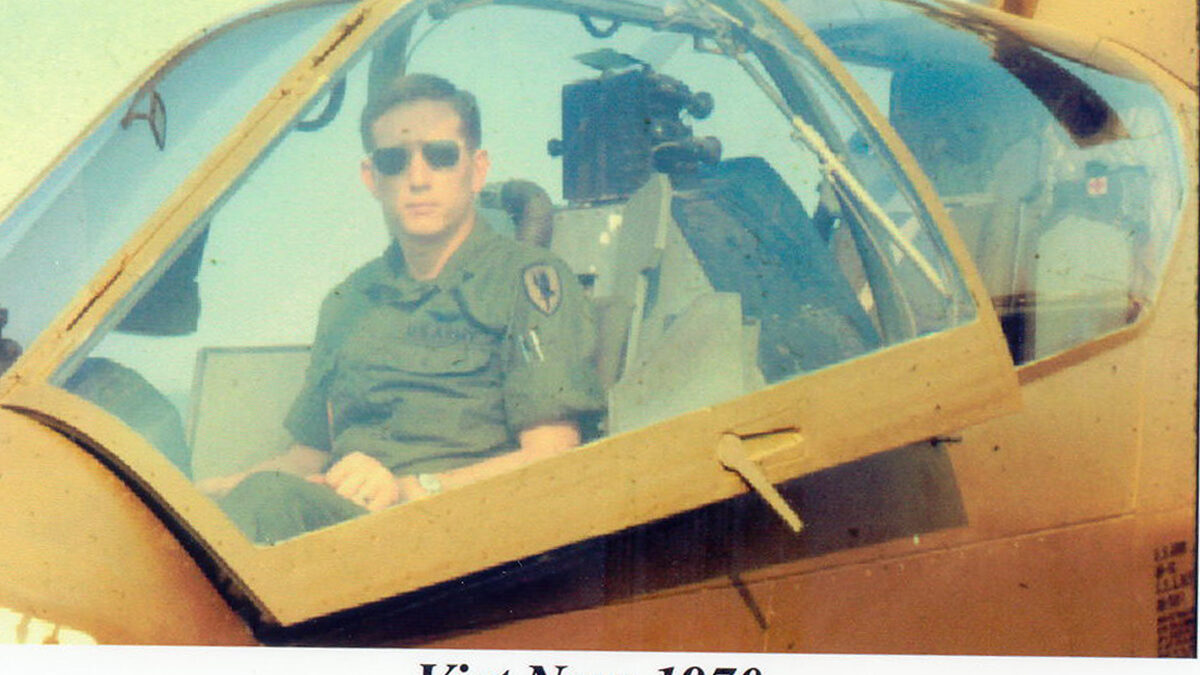
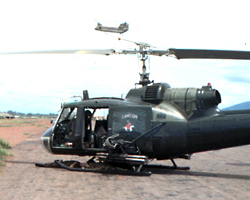
Chief Warrant Officer 3 William G. “Bill” Basham
U.S. Army • AH-1G Cobra Pilot • Vietnam Veteran • Distinguished Flying Cross Recipient
William G. “Bill” Basham was born August 25, 1947, in Bowling Green, Kentucky. In 1966, at age 18, he enlisted in the U.S. Army. He served his first tour in Vietnam with the Signal Corps before entering flight training in 1968.
Basham gradua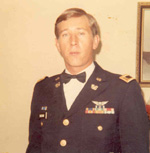 ted with Warrant Officer Rotary Wing Aviator Class 69-15 and continued to Savannah, Georgia, for qualification in the AH-1G Cobra gunship. By September 1969, the young warrant officer was back in Vietnam, this time as a combat aviator with the 334th Aviation Company (Aerial Weapons), 145th Combat Aviation Battalion.
The 334th had a distinguished history as the Army’s first fully armed helicopter unit in Vietnam. Its Cobra crews provided aerial fire support throughout III Corps for American and allied forces. Some of the unit’s most important assignments were “scramble” missions. Armed Cobras stood ready day and night and could be airborne within minutes of a call for help.
Basham later remembered arriving in Vietnam as a confident young Cobra pilot with new wings, a new flight jacket and the feeling that he was invincible. Combat quickly replaced that confidence with experience. He learned to make rocket runs without becoming fixated on the target, respond to aircraft emergencies and keep flying while enemy fire came back at him.
On April 1, 1970, Basham participated in a mission responding to an urgent request for help from an allied armored element pinned down by intense enemy automatic-weapons fire. The Cobra crews attacked the enemy positions with rockets and miniguns. Although the lead aircraft was struck several times, the crews continued their attacks, silenced enemy positions and provided aerial cover while wounded personnel were evacuated. Basham was awarded the Distinguished Flying Cross for heroism during the mission.
Barely a month later, on May 2, Basham took part in another fierce engagement. His fire team was called to support allied forces under heavy automatic-weapons and rocket-propelled-grenade fire from enemy forces occupying a nearby village. Despite intense anti-aircraft fire and hits to their helicopters, the Cobra crews repeatedly attacked enemy positions. Their actions helped break the enemy resistance. Basham received a second Distinguished Flying Cross.
He also received three Air Medals with the “V” Device for heroism and was promoted to Chief Warrant Officer 2 during his combat tour.
One of Basham’s own accounts of his service reveals another side of the war, one not contained in a list of decorations. During the 1970 Cambodian campaign, his two-Cobra fire team scrambled to support an ARVN mechanized infantry company and its American advisers engaged by North Vietnamese forces. Basham’s Cobra came under heavy fire. Bullets shattered the cockpit Plexiglas, both hydraulic systems failed, and his wingman radioed that the aircraft was on fire.
Basham and his copilot, Johnny Almer, managed to put the crippled Cobra on the ground and escape to friendly forces. But the battle was not over. When the second Cobra attacked the enemy position, its front-seat pilot, Wayne Hedeman, was hit. Hedeman died while being flown to the hospital. He was 22 years old.
Years later, Basham’s account of that day did not center on his own survival. He remembered Hedeman and the other young men whose luck ran out. His story captures both sides of combat aviation: extraordinary skill and courage, and t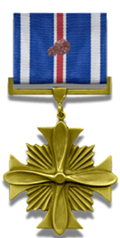 he terrible human cost carried by those who came home.
After Vietnam, Basham continued his Army aviation career with an assignment at Fort Lewis, Washington. He completed the Aviation Safety Officers Course at the University of Southern California and the Aviation Warrant Officer Advanced Course at Fort Rucker, Alabama. During a later assignment in Alaska, he was promoted to Chief Warrant Officer 3.
Following his honorable discharge from the Army in 1978, Basham built a second career in occupational health and safety. He worked for the State of Alaska and later joined Nabors Alaska Drilling, eventually becoming a vice president. He served as president of the Alaska Society of Safety Engineers and was named Alaska Governor’s Safety Professional of the Year.
After semi-retiring, Basham returned home to Kentucky and operated a small farm. He later joined Western Kentucky University’s Occupational Health and Safety Department, where he also fulfilled a lifelong goal by earning his bachelor’s degree.
In retirement, he remained active in veterans organizations, including the Veterans of Foreign Wars, Disabled American Veterans, Vietnam Helicopter Pilots Association, American Legion, Military Officers Association of America and Distinguished Flying Cross Society.
William G. Basham died February 21, 2022.
His military record documents an accomplished Army aviator decorated repeatedly for heroism. His own words leave something equally important: a firsthand account of the young men who flew Cobra gunships in Vietnam, the missions they flew, the friends they lost and the experiences they carried home.