
Colonel Terry W. Wilcutt (USMC, Ret.) is a highly decorated NASA astronaut, accomplished Marine Corps test pilot, and a key leader in space safety and mission assurance. A native of Russellville, Kentucky, born October 31, 1949, Wilcutt’s distinguished career spans military aviation, advanced test piloting, and four pivotal Space Shuttle missions.
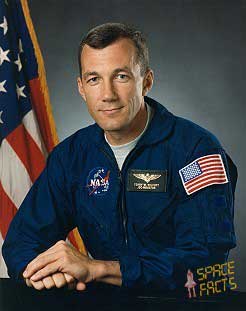
After graduating from Southern High School in Louisville, Kentucky, in 1967 and Western Kentucky University (WKU) in 1974, Wilcutt dedicated two years to teaching high school mathematics before embarking on his military journey.
Distinguished Marine Corps & Test Pilot Career Commissioned in the United States Marine Corps in 1976, Terry Wilcutt earned his pilot wings in 1978. Following initial training on the F-4 Phantom with VMFAT-101, he deployed overseas to Japan, Korea, and the Philippines with VMFA-235. During this period, he honed his combat readiness by attending the elite Naval Fighter Weapons School (Topgun), a testament to his exceptional flying skills.
In 1983, Wilcutt transitioned to the F/A-18 Hornet, becoming a highly sought-after Fighter Weapons and Air Combat Maneuvering Instructor with VFA-125 in Lemoore, California. His expertise led to his selection for the United States Naval Test Pilot School (USNTPS) in 1986. Upon graduation, he served as a test pilot and project officer for the Strike Aircraft Test Directorate (SATD) at the Naval Aircraft Test Center, Patuxent River, Maryland. In this critical role, Wilcutt flew a diverse range of aircraft, including the F/A-18 Hornet, A-7 Corsair II, and F-4 Phantom, contributing to various advanced and classified aviation programs. He boasts an impressive record of over 6,600 flight hours in more than 30 different aircraft types.
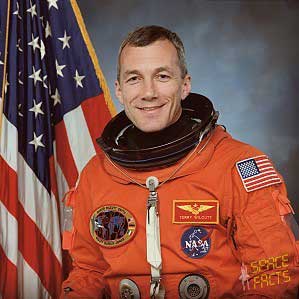
NASA Astronaut & Space Shuttle Commander Selected by NASA in January 1990, Colonel Wilcutt officially became an astronaut in July 1991. His extensive technical assignments at NASA included critical work on Space Shuttle Main Engine and External Tank issues, serving on the Astronaut Support Personnel team at Kennedy Space Center (KSC) for Shuttle launches and landings, and addressing technical matters for the Astronaut Office Operations Development Branch. He also served as NASA Director of Operations at the Yuri Gagarin Cosmonaut Training Center in Star City, Russia, playing a vital role in international space collaboration. Later, he became Chief of the Astronaut Office Shuttle Operations Branch and Manager of Safety & Mission Assurance for the Space Shuttle Program.
A seasoned space veteran, Colonel Wilcutt completed four space flights, logging over 1,007 hours in space:
- STS-68 Endeavour (Pilot): September 30 to October 11, 1994. This “Mission to Planet Earth” included the Space Radar Lab-2 (SRL-2) to study Earth’s surface and atmosphere, contributing to environmental and geological monitoring.
- STS-79 Atlantis (Pilot): September 16 to September 26, 1996. The fourth Shuttle-Mir docking mission, delivering supplies and personnel to the Mir Space Station.
- STS-89 Endeavour (Mission Commander): January 22 to January 31, 1998. The eighth Shuttle-Mir docking mission, delivering astronaut Andy Thomas to Mir and returning David Wolf. This mission was part of the early assembly of the International Space Station (ISS).
- STS-106 Atlantis (Mission Commander): September 8 to September 20, 2000. A crucial mission to prepare the ISS for the arrival of its first resident crew, delivering supplies and performing spacewalks.
Wilcutt was NASA’s Chief of Safety and Mission Assurance, until his retirement from NASA in December 2020.
Col Terry Wilcutt was inducted into the Western Kentucky University Alumni Hall of Fame in 1995 and the Aviation Museum of Kentucky in 2008. Aviation Heritage Park & Museum honors Col Wilcutt with both a museum exhibit and the display of NASA Trainer T-38, #901 which was flown by every Mercury, Gemini and Apollo astronaut.


