LT. COL. JAMES “JIM” COOPER | U.S. AIR FORCE
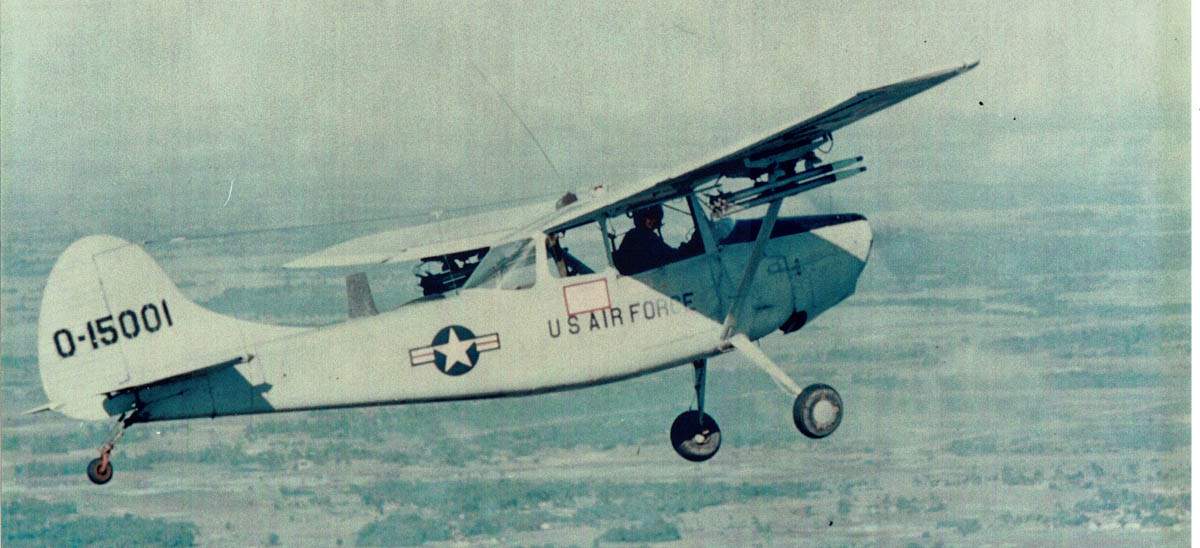
O-1 BIRD DOG FORWARD AIR CONTROLLER • VIETNAM
SILVER STAR RECIPIENT
James “Jim” Cooper was born in Indiana and moved to Owensboro, Kentucky, early in life. He attended Western Kentucky State Teachers College, now Western Kentucky University, where he enrolled in Air Force ROTC. After graduating in 1954, Cooper was commissioned a second lieutenant in the U.S. Air Force and entered active duty.
 Cooper wanted to fly multi-engine aircraft and was selected for the KC-97 Stratofreighter, the propeller-driven tanker then used by Strategic Air Command. In 1958, he transitioned to the new jet-powered KC-135 Stratotanker. Based at Clinton-Sherman Air Force Base in Oklahoma, he became an aircraft commander and instructor pilot and spent nearly a decade flying with Strategic Air Command.
Then his Air Force career changed dramatically.
In 1967, Cooper learned that he was being sent to Vietnam as a Forward Air Controller. Instead of commanding one of the Air Force’s massive jet tankers, he would fly the tiny single-engine O-1 Bird Dog.
“I went from a 297,000 lb. aircraft to a 2,600 lb. aircraft,” Cooper later recalled. “Heck, I was used to burning 2,500 lbs. of fuel just taxiing the KC-135. It was quite a change in missions.”
The difference involved much more than the size of the airplane.
Forward Air Controllers flew low over hostile territory searching for enemy positions, marking targets and directing attack aircraft onto them. They also helped coordinate search-and-rescue operations for downed airmen. At Eglin Air Force Base in Florida, Cooper learned to locate targets, mark them with white-phosphorus rockets without the aid of a gunsight, and direct aircraft delivering bombs, rockets, guns and napalm.
Major Cooper arrived at Bien Hoa, South Vietnam, during the Tet Offensive in 1968 and soon moved to Tay Ninh, an area under persistent enemy pressure. Flying day and night, he directed airborne firepower in support of friendly forces on the ground.
During an attack on a nearby Special Forces camp, Cooper helped coordinate the response after enemy fire brought down an F-4 Phantom and a rescue helicopter. Somewhere near the camp, a concealed North Vietnamese anti-aircraft gun threatened both the defenders and aircraft attempting to help them.
 Cooper remained overhead despite intense small-arms fire, coordinating the rescue effort while searching for the hidden gun and directing aircraft supporting the troops below.
He found it.
Cooper fired a marking rocket directly into the concealed position and radioed the waiting strike aircraft:
“Hit my smoke!”
The position was attacked and the anti-aircraft gun destroyed.
Cooper later visited the rescued pilots in the hospital and told them, “We got the gun that got you.”
For his actions during the battle, Major James Cooper was awarded the Silver Star.
After returning from Vietnam, Cooper attended Air Force Flying Safety School and was assigned to Kadena Air Base on Okinawa, where he directed the installation’s flying safety program for two years. He later served as Base Safety Officer at Fairchild Air Force Base in Washington before retiring from the Air Force in 1977.
His aviation career, however, was not finished.
Cooper returned to Bowling Green and worked as an industrial foreman before joining the faculty of Embry-Riddle Aeronautical University in Daytona Beach, Florida. For 18 years he taught aeronautical science and directed the university’s Aircraft Dispatcher program in cooperation with the Federal Aviation Administration.
Lt. Col. James Cooper’s decorations included the Silver Star, Distinguished Flying Cross, Bronze Star and other campaign and unit awards.
He died October 27, 2008.
From the flight deck of a Strategic Air Command tanker to a small observation aircraft circling under enemy fire, Cooper’s career encompassed remarkably different forms of military aviation. He later carried that experience into the classroom, spending nearly two decades preparing another generation for careers in aviation.